infographic · chapter · graph · drafted
How cheap is it to undo?
For ch. 15, Direction is the scarce skill · proposal how-cheap-is-it-to-undo in the plan
The SVG The data Review it in the plan
What it is for
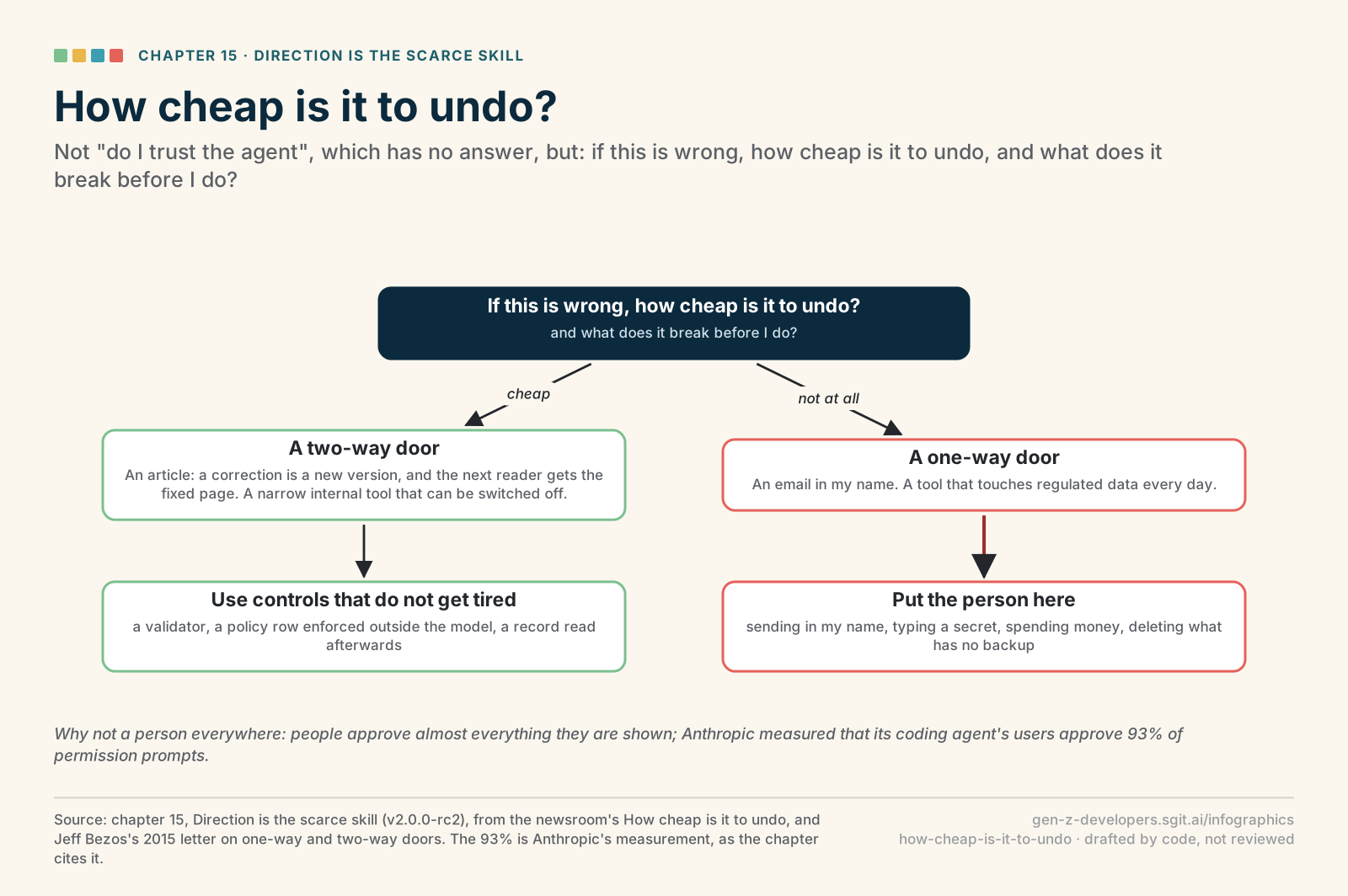
It is the chapter's most usable test, for an employee reviewing agent output and for a founder deciding build or buy; a founder can pin it above the desk.
How it is made
Drawn by admin/build/infographic_svg.py from admin/content/infographics/drawn/how-cheap-is-it-to-undo.json, as a graph. Change the data and rebuild; the picture follows. It keeps the book's colours in every theme of this site, because it is a printed picture: the same file goes into the PDF.
Notes
The 93% figure is Anthropic's measurement as cited in the chapter; keep the attribution on the graphic. The Google executive's test is unsourced (open question for Dinis), so leave it off.
Checked against the source
Every line below is on the drawing or behind it, and the build found each one word for word in v2/content/5-judgement/15__direction-and-judgement.md. A line changed in the chapter and not here stops the release.
- “Not "do I trust the agent", which has no answer, but: if this is wrong, how cheap is it to undo, and what does it break before I do?” ✓
- “An article is a two-way door: a correction is a new version, and the next reader gets the fixed page. An email in my name is a one-way door.” ✓
- “A narrow internal tool that a few people use and that can be switched off is a two-way door” ✓
- “A tool that touches regulated data every day is a one-way door” ✓
- “use controls that do not get tired: a validator, a policy row enforced outside the model, a record read afterwards.” ✓
- “sending in my name, typing a secret, spending money, deleting what has no backup” ✓
- “users approve 93% of permission prompts” ✓